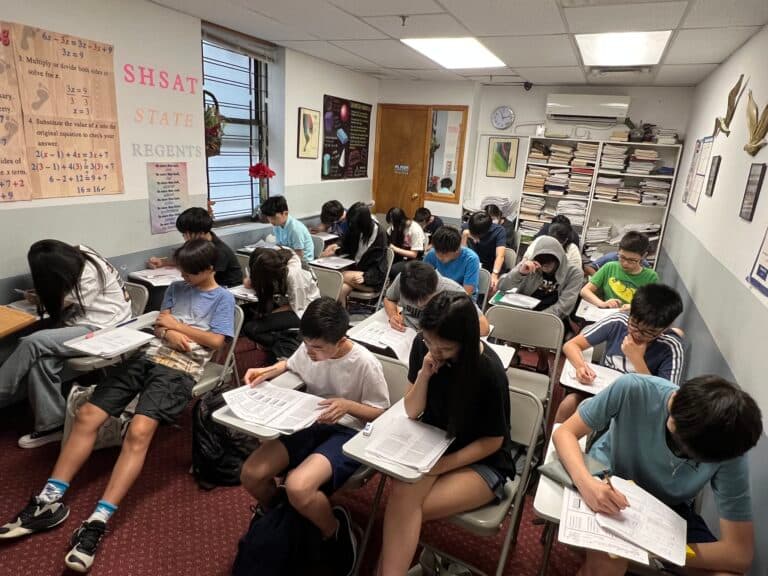
Why weekends work for many families
For many NYC families, weekday afternoons are already crowded with homework, commuting, activities, and family responsibilities. Weekend tutoring gives students a more focused block of time to review school material, strengthen weak areas, and prepare for upcoming exams without squeezing everything into a tired weeknight.
The best weekend schedule is structured but not overwhelming. Students should leave class with a clearer understanding of what they practiced and what they need to complete before the next session. A weekend program also gives teachers room to combine instruction, guided practice, and independent work in one sitting.
What students should get from a weekend class
A strong weekend class should connect directly to the student's grade level and goals. Younger students may focus on reading fluency, grammar, paragraph writing, and core math skills. Older students may need more targeted exam preparation, including state tests, Algebra readiness, SHSAT-style problem solving, or SAT and PSAT foundations.
Families should treat weekend tutoring as part of a weekly rhythm. Students make the most progress when they attend consistently, complete assigned practice, and review mistakes before the next class. At Higher Learning, weekend programs are designed to give students that rhythm: clear instruction, careful practice, and enough repetition for skills to stick.
Plan around school deadlines
A weekend program should support the school year, not compete with it. In the fall, many students need help rebuilding routines after summer. By winter, teachers can usually see which skills are still fragile. In spring, state tests, report cards, and admissions timelines create more pressure. The earlier families establish a routine, the less rushed the year feels.
Parents should bring school concerns into the conversation: recent test scores, writing comments from teachers, math topics that caused trouble, or upcoming exams. The more context a tutoring center has, the better it can target classwork and homework. Weekend tutoring works best when it becomes the place where students organize the week, repair weak skills, and prepare for the next challenge.
Make homework manageable
Weekend tutoring should not bury students under work they cannot realistically complete. Homework should be purposeful: enough practice to reinforce the lesson, not so much that students rush or avoid it. A well-designed assignment lets teachers see whether the student can apply the skill independently after class.
Parents can help by setting a consistent homework window during the week. Even twenty to thirty minutes at a predictable time can keep the lesson fresh. If the student struggles, they should mark the problem and bring it back instead of guessing through the whole assignment. That habit teaches responsibility without turning homework into a nightly fight.
Use weekends for deeper thinking
The advantage of a weekend block is that students can slow down. Teachers have time to unpack a reading passage, model a math setup, revise a paragraph, or review several related mistakes. That deeper work is hard to do when everyone is exhausted after a long school day.
A good weekend program should leave students with something clearer than when they arrived. They should know the strategy they practiced, the mistake they corrected, and the next step. That clarity is what keeps weekend tutoring from becoming just another activity on the calendar.
Ready to talk?
Contact Higher Learning to review schedules, placement, and enrollment options.
Visit Us In Person